

Current Research
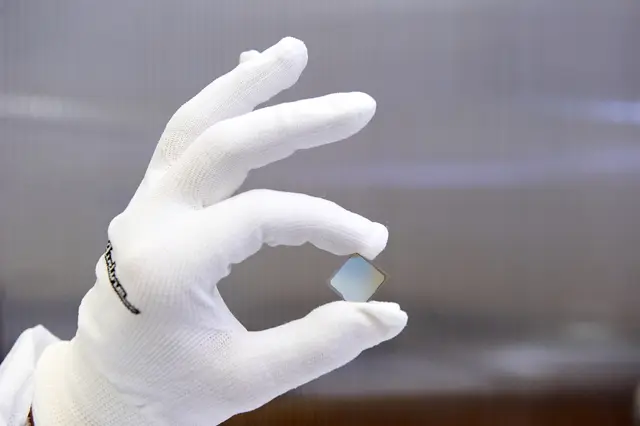
Development of a set of scientific and technical solutions for the production of biofuels and optimal biofuel compositions, enabling the transformation of consumed energy sources in line with current trends in energy efficiency, reduction of the product carbon footprint, and the use of alternative fossil fuels
Research Supervisor: Vladimir V. Bukhtoyarov
Enhancing the competitiveness of agricultural and other industries through the development of a set of scientific and technical solutions for the production of biofuels and optimal biofuel compositions, enabling the transformation of consumed energy sources in line with current trends in energy efficiency, reduction of the product carbon footprint, and the use of alternative fossil fuels.
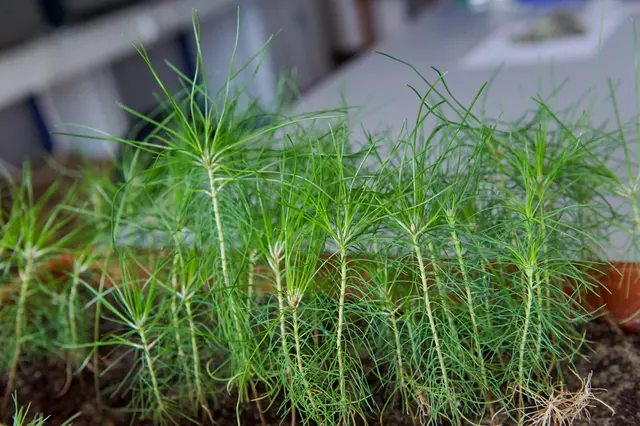
Climate Change Economics and Environmental Development
Research Supervisor: Anton I. Pyzhev
Development of scientific foundations for solving the problems of economic adaptation to climate change and environmental development of the Yenisei Siberia macroregion, including through minimizing the carbon footprint of industrial and socio-economic processes and the development of carbon balance assessment technologies.
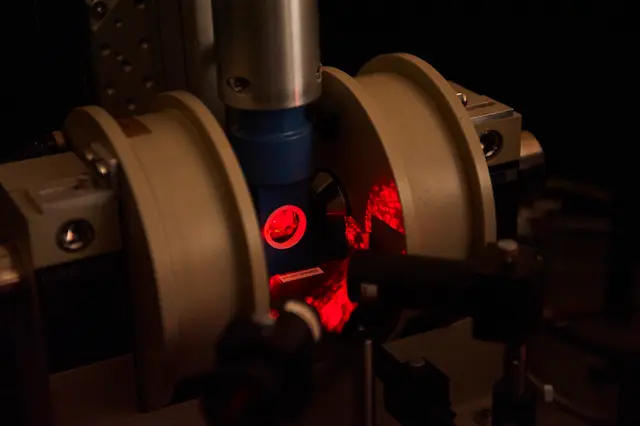
Physicochemical foundations of carbon‑free technologies for the production of aluminum alloys and low‑carbon technologies for the processing of carbon‑containing waste and coal
Research Supervisor: Pavel O. Yuriev
Study of the regularities of carbon‑free electrodeposition of rare‑earth elements and their aluminum alloys from molten salts using an oxygen‑evolving anode. Study of the interaction regularities of these rare‑earth elements and their aluminum alloys. Development of environmentally friendly and efficient low‑carbon technologies for the processing of fossil fuels and carbon‑containing waste.
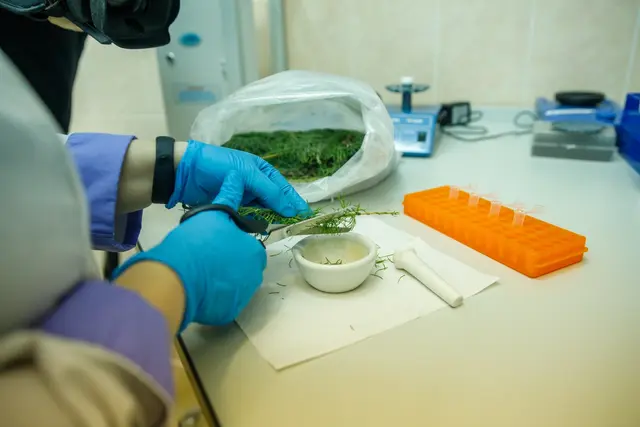
Development of new methods for analyzing the digital anatomy of woody plants to study climate change processes in Eurasia
Research Supervisor: Alberto José Arsak Peña
The main goal of the project is to establish a laboratory that will advance dendrochronology by combining classical approaches (e.g., tree‑ring width, densitometry, and wood anatomy) with new tools based on the application of artificial intelligence methods. Throughout the project, methods will be developed to gain a deeper understanding of the influence of environmental factors and climate change on tree species across different spatial and temporal scales. The research will focus on the anatomical structure of trees and tree physiology at several stages of tree‑ring formation and tree growth.
Thus, it will become possible to:
1. Reveal the impact of climate change on tree growth;
2. Reconstruct past climate changes using tree‑ring width data and other parameters such as wood density and anatomy;
3. Predict the potential of trees and forests under ongoing climate change;
4. Improve and develop new methods related to dendrochronology and climate change research.

Development of the physicochemical foundations of resource‑saving technologies for the production of non‑ferrous, trace, and rare‑earth metals, and the creation of new materials based on them
Research Supervisor: Andrey S. Yasinsky
The goal of the project is a comprehensive study of the raw material base and the development of the physicochemical foundations of resource‑saving technologies for the production of non‑ferrous, trace, and rare‑earth metals, as well as the creation of new alloys and materials based on them. The proposed project is focused on expanding the range of natural and technogenic raw material sources of trace and rare‑earth elements in the Krasnoyarsk region, developing the scientific foundations of technologies for the deep processing of new types of raw materials, developing and implementing new approaches to the production and refining of non‑ferrous metals by electrolysis of ionic melts, developing the fundamental foundations for the creation of new alloy compositions of non‑ferrous metals and technologies for their deformation processing, and synthesizing and studying the properties of complex oxide compounds using the results of the conducted research.
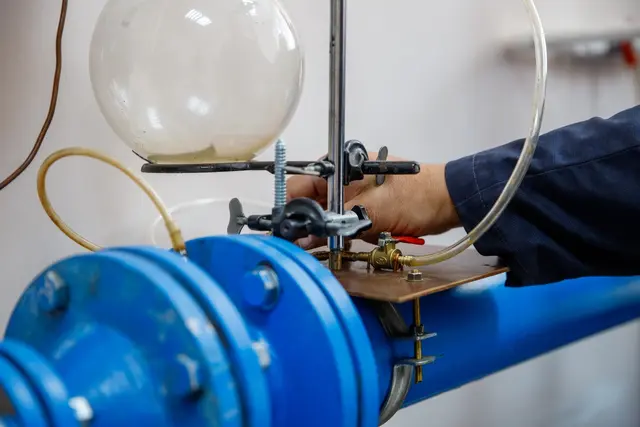
Physicochemical Technologies for the Development of Hard‑to‑Recover Hydrocarbon Reserves
Research Supervisor: Andrey V. Minakov
The goal of this project is to investigate and develop new highly efficient and environmentally safe methods for enhancing oil recovery using micro‑ and nanofluidic technologies. As oil‑displacing fluids, the project proposes to consider promising biopolymer solutions, hydrocarbon‑based nanoemulsions, and low‑concentration nanoparticle suspensions. To establish the mechanisms by which nanofluids influence oil flow regimes during waterflooding, microfluidic chips will be used.
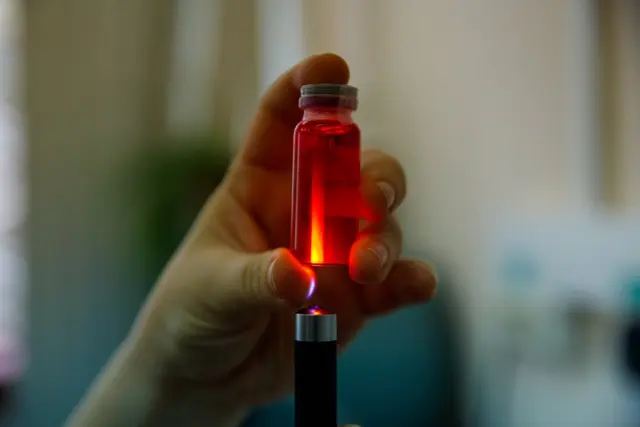
Development of Frontier X‑ray and Optical Methods for the Study of Matter and Advanced Materials for Applications in Photonics, Medicine, and Sensing
Research Supervisor: Sergey P. Polyutov
The goal of this interdisciplinary project is to develop the fundamental foundations for advancing the following scientific directions:
- Study of light scattering by dielectric resonant metasurfaces for the development of a prototype high‑sensitivity sensor. Synthesis of Fano response for singular optical beams to optimize the optical field of the sensor’s working signal.
- Investigation of the recently theoretically predicted charge‑transfer plasmons (CTPs) and the search for materials for thermoelectric converters, including CTPs;
- Investigation and engineering of eigenmodes of periodic structures made of resonant plasmonic nanoparticles in the form of waveguides for high‑efficiency energy transfer between adjacent elements;
- Search and investigation of low‑dimensional metal halides, including organometallic compounds, with the aim of increasing their quantum yield and thermal stability, as well as tuning the luminescence wavelength;
- Development of fundamentally new theoretical methods for X‑ray spectroscopy, including electron–ion coincidence spectroscopy, enabling the most complete description of the dynamics of ultrafast processes arising from the linear and nonlinear interaction of X‑ray radiation with molecular systems. The main focus will be on the development of cutting‑edge experimental–theoretical pump–probe schemes involving X‑ray, optical, IR, and VUV pump pulses, the investigation of ultrafast dynamic processes in molecular systems, including energy redistribution during photodissociation and spin dynamics;
Development of an accurate and computationally economical approach for quantum‑chemical calculations of electronic transitions in molecules from the ground to valence‑ and core‑excited states in the calculation of X‑ray absorption spectra and resonant inelastic X‑ray scattering.
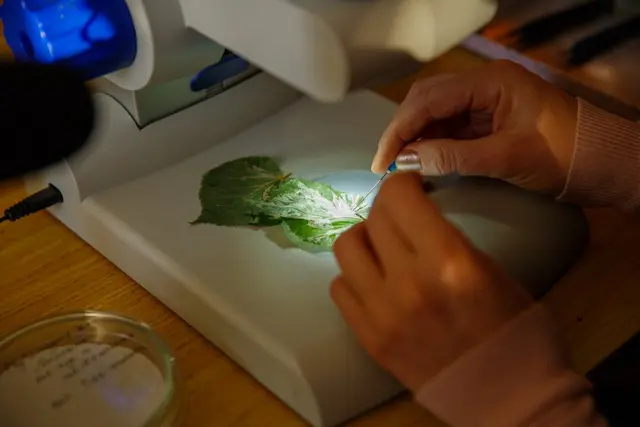
Effective Assessment of Current Climate and Environmental Risks for Central Siberia: Eco‑Climatic Center
Research Supervisor: Vladimir V. Shishov
The project is aimed at solving the fundamental problem of assessing adverse past, present, and projected weather and climate impacts on the environmental and socio‑economic processes of a constituent territory of the Russian Federation under changing climate conditions. The goal of the project is to create an automatic information system for assessing climate and environmental risks for a territory using the example of the Yenisei‑Angara macroregion, based on direct (meteorological) observations and indirect (dendrochronological) sources of weather and climate information.
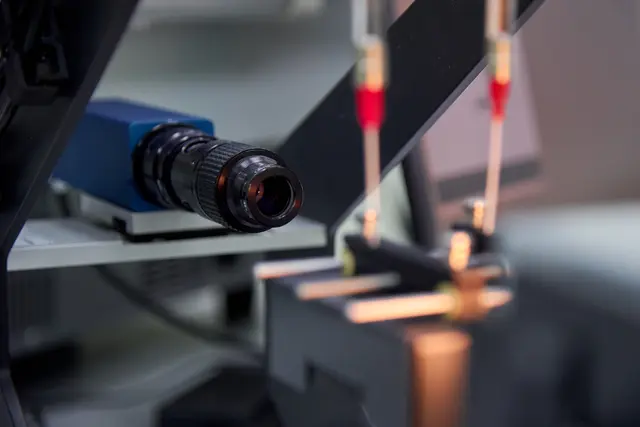
Development of Fundamental Foundations and Technologies for Personal Mobile Satellite Communication Systems
Research Supervisor: Yuri P. Salomatov
Development of fundamental foundations and the search for technical solutions, theoretical elaboration and experimental substantiation of the most important space‑based subsystems and ground stations, as well as the traffic of potential subscribers within personal and mobile satellite communication systems. Design, modeling, prototyping, and computational‑experimental studies of satellite communication equipment; research into new, advanced components of its element base, antenna systems, data processing algorithms, and control software.
Theoretical and experimental studies of the mechanism and regularities of the synthesis of hydraulic hardening binder materials based on waste from the aluminum, chemical, nuclear industries, and energy production
Research Supervisor: Boris P. Kulikov
Creation of a theoretical and experimental foundation for expanding the raw material base and market of construction materials through the involvement of technogenic waste from the aluminum, chemical, coal mining, nuclear industries, and energy production in processing, as well as solving problems in the field of environmental protection and resource conservation.